The Reason Your Portland Map Pin Is Still Stuck on Page Two
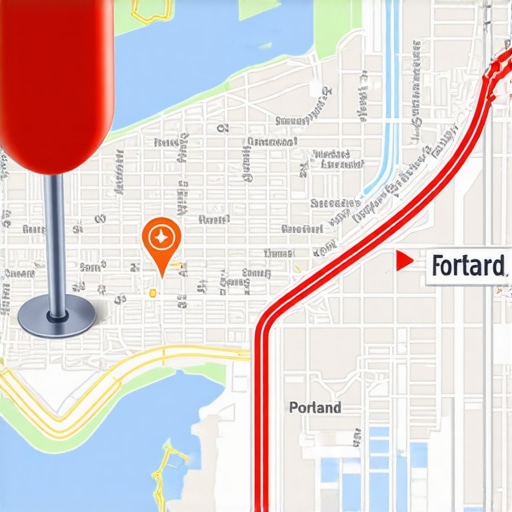
You’ve seen it happen. You pull out your phone, stand in the middle of your own shop in the Pearl District or out on SE Division, and search for your primary service. You expect to see your name at the top, glowing with five stars. Instead, you’re scrolling. And scrolling. You’re past the big-box chains, past the competitors who have half your experience, and there you are – buried on page two. In the world of google business profile seo, being on page two is the digital equivalent of having a storefront in an abandoned alleyway. You’re close enough to smell the coffee at Stumptown, but nobody is walking through your door.
I’m Derek Hines, and I’ve spent years dissecting why some Portland businesses dominate the Map Pack while others, despite being “good enough,” remain invisible. In a city as competitive and geographically nuanced as Portland, “good enough” is exactly why you are losing high-intent calls to the guy three blocks over. The Map Pack captures the vast majority of clicks for local searches. If you aren’t in those top three spots, you aren’t just losing rank; you’re losing revenue. This isn’t about luck; it’s about a technical roadmap that most “cheap” SEO packages completely ignore. Let’s look at why your pin is stuck and how we move it.
The “Trinity” of Local Ranking: Why Distance Isn’t Everything
Most Portland business owners I talk to think they can’t rank because they aren’t “central” enough. They assume that if they aren’t right in the heart of downtown, they’re doomed. This is a fundamental misunderstanding of how Google’s local algorithm works. Google relies on three pillars: Relevance, Distance, and Prominence. While Distance is a fixed variable – you can’t exactly pick up your building and move it – it is often the least important factor when the other two are optimized correctly.
To rank google business profile listings effectively, you have to realize that Google prioritizes the user experience over proximity. If a user is searching for “emergency plumbing” in Northeast Portland, Google might bypass a plumber two blocks away if their profile is incomplete or lacks authority, opting instead for a plumber in Milwaukie who has a massive “Prominence” score. You can dominate “Relevance” and “Prominence” through aggressive google business profile optimization, effectively bridging the gap that your physical location might create. If you’re wondering where your specific gaps are, I recommend looking at The 10-Minute Map Audit That Uncovers Hidden Portland Ranking Errors to see how your “Trinity” stacks up against the competition.
Relevance is about how well your profile matches what someone is searching for. If your profile is vague, Google won’t risk showing you to a searcher. Prominence is how well-known your business is in the offline world and across the web. This is where your brand’s digital footprint – reviews, articles, and links – comes into play. By focusing on these two, we can overcome the “Distance” hurdle and pull your pin from the depths of page two.
The “Ghost Town” Profile: Why Your Data is Killing Your Rank
One of the most common reasons Portland businesses fail to hit the Map Pack is what I call the “Ghost Town” profile. This is a profile that was set up in 2019, had a few photos uploaded, and hasn’t been touched since. In 2025 and 2026, Google’s AI-driven search algorithms view inactivity as a signal of irrelevance. If you haven’t updated your information, Google assumes you might not even be in business anymore.
Research consistently shows that “Complete and Accurate Business Information” is the foundational element of ranking in the mid-2020s. It’s not just about having your phone number right; it’s about the technical nuances of your categories. For example, if you’re a Portland plumber, being categorized only as “Plumber” is a rookie mistake. If you miss secondary categories like “Drainage service,” “Water heater repair,” or “Heating equipment supplier,” you are invisible to users searching for those specific high-intent terms. You need a comprehensive google business profile audit tool to identify these missing links. Without these sub-categories, you are essentially telling Google you only do one thing, when your customers are searching for ten.
Furthermore, NAP (Name, Address, Phone Number) consistency is still a major factor. If your address on your website says “Suite 200” but your Google profile says “#200,” or if your old Yelp profile still has your previous office location in Beaverton, you are creating “data friction.” This friction confuses Google’s crawlers, causing them to lose trust in your location data. When trust drops, your ranking drops. This is often why your Portland storefront is a ghost on Google Maps and how to fix it requires a deep dive into every corner of the internet where your business is mentioned.
Review Velocity vs. Review Volume
I see it all the time: a business owner brags about having 150 five-star reviews. Then I look closer, and 140 of those reviews were from three years ago. In the eyes of Google, 100 old reviews are often worth less than 10 new ones. This is the concept of Review Velocity and Recency. Google wants to see that you are providing a great service *today*, not that you were great back when the Blazers were in the playoffs.
Review Velocity is the speed at which you acquire new reviews. A steady stream of 2-3 reviews per week is significantly more powerful for google maps seo than a “review bomb” of 50 reviews in one day followed by months of silence. Google’s algorithms are designed to detect unnatural patterns; they want to see organic, consistent growth. Additionally, your response rate matters. If you aren’t responding to your reviews – especially the negative ones – you are failing a key “Prominence” test. Responding to reviews signals to Google that the business is active and cares about customer feedback. It also provides an opportunity to naturally include keywords in your responses, further boosting your “Relevance.”
Many business owners struggle with this because they don’t want to “pester” their clients. However, there are ways to automate this process and make it a seamless part of your customer journey. If you’re struggling to get that needle moving, check out The Fast Path to Better Reviews Without Annoying Your Customers. Remember, a 4.8-star rating with consistent new feedback will almost always outrank a 5.0-star rating that hasn’t been updated in six months. Social signals are the highest-weighted factors in local trust, and in 2026, AI search engines use these signals to determine which businesses are “vibrant” enough to recommend to users.
Visual Authority: The 2026 Photo & Post Strategy
As we move further into an AI-integrated search landscape, the visual component of your Google Business Profile has become a primary ranking signal. Google’s Vision AI can now “read” your photos. If you’re a contractor and you upload a high-quality photo of a kitchen remodel in the West Hills, Google’s AI identifies the cabinets, the tiling, and even the “vibe” of the neighborhood. This adds a massive layer of “Relevance” that text alone cannot achieve.
In 2026, “stale” profiles that lack regular photo updates and GBP posts are being pushed down by more active competitors. Portland users are highly visual; they want to see the interior of your shop, the faces of your team, and the quality of your work. Regular posting – at least once or twice a week – is no longer optional. These posts should highlight recent projects, local events, or special offers. Using local seo software to schedule these updates ensures that your profile never looks like a digital graveyard. This consistent activity tells Google that you are a “live” entity, which is crucial for maintaining google business profile visibility.
Don’t just post stock photos. Google knows. Use authentic, high-resolution images of your actual business in Portland. Show the rain on the sidewalk outside your cafe; show your truck parked near the Tilikum Crossing. These geographic markers, even if subtle, help ground your business in the local context that Google’s AI is constantly trying to map. This visual authority is often the “X-factor” that allows a small boutique in the Pearl to outrank a national chain with a million-dollar marketing budget.
The Hidden Anchor: Local Backlinks and Schema
Your Google Map pin does not exist in a vacuum. It is tethered to the health and authority of your actual website. If your website is slow, not mobile-friendly, or lacks local context, it acts as a lead anchor on your Map ranking. This is where local map pack seo intersects with traditional organic SEO. To rank higher on google maps, your website must prove to Google that you are an authority in the Portland area.
One of the most underutilized tools in the local arsenal is Local Schema markup. This is a specific type of code that tells search engines exactly what your business is, where it is, and what services you offer. It’s like giving Google a cheat sheet for your business. Without it, you’re relying on Google to “guess” your details correctly. Beyond code, you need local backlinks. A link from a major national site is great, but for a Portland business, a mention in Willamette Week, PDX Monthly, or a local neighborhood blog is gold. These “local citations” act as votes of confidence from the Portland community. They tell Google, “This business is a real, respected part of this specific city.”
For those looking to compete with the big guys, you need to think outside the box. Large chains have massive backlink profiles, but they rarely have local relevance. You can beat them by being more “Portland” than they are. I’ve detailed exactly how to do this in 4 Portland SEO Strategies That Beat Large Chains in 2026. By focusing on hyper-local authority, you create a digital foundation that keeps your Map pin anchored at the top of the search results, regardless of how much the algorithm changes.
Troubleshooting Checklist: The 60-90 Day Turnaround
If you are tired of being invisible, it’s time to stop guessing and start executing. Local seo services shouldn’t be a mystery; they should be a series of measurable actions. Typically, when we implement a rigorous google business profile management strategy, we see measurable improvements in the Map Pack within 60 to 90 days. This isn’t an overnight fix, but it is a permanent one if maintained correctly.
Here is your immediate troubleshooting checklist to get off page two:
- Verify NAP Consistency: Ensure your Name, Address, and Phone number are identical across your website, GBP, and all social directories.
- Audit Your Categories: Use local seo tools to see what categories your top 3 competitors are using and match/exceed them.
- Activate Review Velocity: Implement a system to ask every customer for a review immediately after service.
- Visual Refresh: Upload 5-10 new high-resolution, geo-tagged photos of your Portland location this week.
- Check for Hidden Errors: Use The Ranking Expert’s Checklist for Recovering a Dropped Portland Map Position to ensure you haven’t been hit by a “shadow” penalty or a data conflict.
- Update Your Website Schema: Ensure your LocalBusiness Schema is properly implemented and matches your GBP data exactly.
Google’s job is to provide the best, most relevant answer to a user’s question. If you provide the most data, the most recent activity, and the most local authority, Google will eventually have no choice but to put you at the top.
Conclusion: Reclaiming Your Portland Foot Traffic
The Portland market is too valuable to let national directories and lazy competitors hijack your traffic. Being stuck on page two isn’t a permanent sentence; it’s a symptom of a profile that has been neglected or improperly optimized. By focusing on the “Trinity” of ranking, maintaining high review velocity, and leveraging 2026 visual strategies, you can reclaim your spot in the Map Pack and start capturing the google maps lead generation your business deserves.
Don’t let your business stay a ghost. Use a google maps rank tracker to monitor your progress daily and see exactly where you stand. If you’re ready to stop scrolling and start ranking, contact Derek Hines for a manual, deep-dive audit of your profile. Let’s move that pin to where it belongs: at the top of the Portland Map Pack.